
We’ve all experienced that moment when, after a day at work, we mindlessly scroll through our phones without finding anything satisfying. Leisure trends evolve quickly, but the real challenge is not to know them: it’s to identify the one that will last more than two weeks in our schedule.
Time and budget constraints: the filter that no one applies before choosing a leisure activity
Before diving into an activity, we rarely think to check if it fits our actual constraints. A pottery class on Tuesday evening sounds appealing, but if we get home from work at 7:30 PM and the workshop closes at 8 PM, giving up is inevitable.
The 2025 cultural outings barometer from the Ministry of Culture confirms this reality: among the main obstacles to outings, we find lack of availability and fear of overcrowding. Lack of ideas comes only after.
To filter effectively, we can cross-reference three simple criteria before committing:
- The time slot available each week, including round-trip travel (not just the duration of the activity)
- The actual recurring cost, including materials (a seemingly free creative hobby can be expensive in supplies)
- The possibility of practicing alone or in a group depending on the weeks, to avoid depending on others’ schedules
By browsing the leisure activities on Buzz du moment, we can quickly spot activities categorized by format and context, which helps with this initial sorting.
Creative and manual hobbies: trends that last in daily life
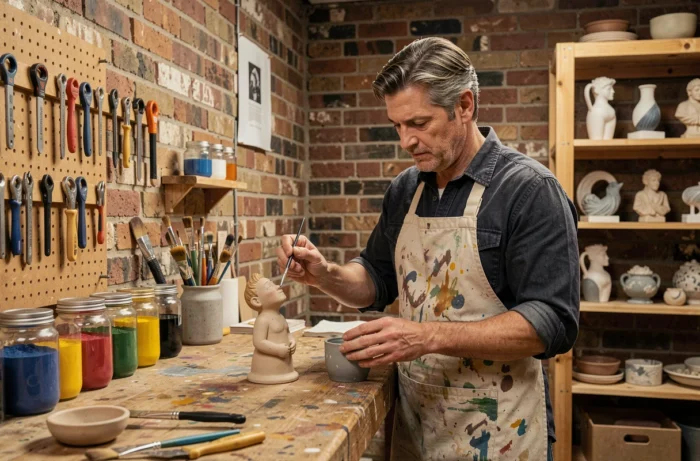
Manual activities are experiencing a resurgence of interest that goes beyond mere fashion. The difference with fleeting fads is that creative hobbies adapt to short time slots, sometimes just twenty minutes between two tasks.
Punch needle, crochet, or handmade bookbinding operate on this principle. You progress at your own pace, set the project down, and pick it up again. No need to block off two hours straight or travel far.
What distinguishes a sustainable creative hobby from a passing trend
A creative hobby lasts over time when it offers visible progress. Embroidery, for example, produces a tangible result from the very first session. In contrast, some activities take weeks before yielding anything presentable, which can be discouraging.
A good indicator: the ratio between the time invested and the first concrete result. If you can show something after two sessions, motivation remains high. This criterion also explains the success of paint-by-numbers or diamond painting, which guarantee quick visual results.
Outdoor activities and gentle sports: accessible leisure trends without equipment
Nordic walking, padel, and pickleball are gaining ground in France. Their common point: a short learning curve and minimal initial material investment.
Padel illustrates this mechanism well. You can rent a racket on-site, the court is shared among four players, and a session lasts less than an hour, including travel if the club is nearby. This compact format explains why it attracts people who had given up tennis due to lack of time.
Outdoor sports and weekly regularity
The classic trap with sports hobbies is aiming too high. Three sessions a week at the gym rarely last beyond January. A single weekly session practiced regularly produces more effects than three sessions abandoned after a month.
Gentle activities like outdoor yoga, urban hiking, or leisure cycling work precisely because they don’t demand performance. You go out, walk, pedal. No scores, no rankings, no pressure.
Digital hobbies and board games: choosing between screen and board
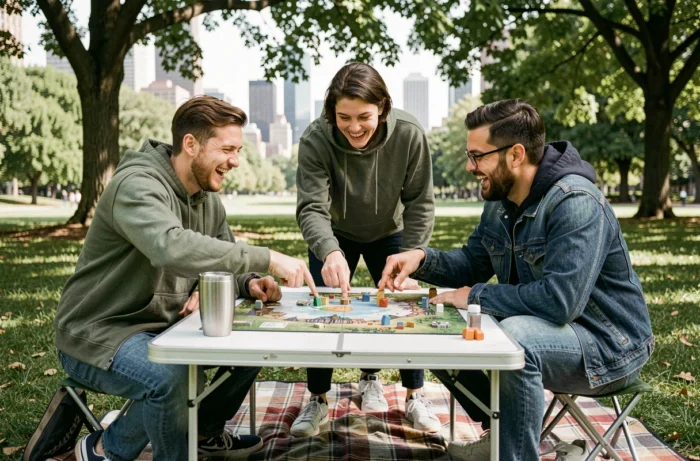
Video games remain among the most practiced leisure activities, but screen fatigue is pushing more and more players towards modern board games. French publishers release hundreds of new titles each year, and the board game market shows no signs of slowing down.
The question is not to choose one over the other. The alternation between digital leisure and screen-free activities allows for varied stimulation. An online escape game on Wednesday, a tabletop role-playing game on Saturday: both formats complement each other.
Cooperative online games: a social hobby at a distance
For those living far from their loved ones, cooperative online games serve a concrete social function. You meet at a fixed time, collaborate on a common goal, and the regularity of the meeting creates a ritual comparable to an associative activity.
What matters is not the medium (screen or board) but the fact that the hobby generates regular interaction. A solo game can entertain, but it doesn’t replace the bond created by a shared game.
Cultural outings: access varies by profile
The Ministry of Culture’s barometer indicates a decline in museum and exhibition visits. Those aged 15-24 frequent cultural facilities more than older audiences, and professionals report more outings than average.
Access to cultural leisure depends as much on education and place of residence as on motivation. Before recommending an exhibition or live performance, it’s essential to check what’s available within a reasonable radius. In rural areas, local cultural offerings often rely on community organizations, libraries, and seasonal festivals.
The Culture Pass, which includes a collective component for school projects, has seen its funding reduced for 2025. Reservations for school projects were even suspended for part of the year. This context makes it even more relevant to seek out free or low-cost alternatives nearby.
The best hobby is not the one that generates the most buzz on social media. It’s the one you still practice in three months because it fits into your week without forcing.