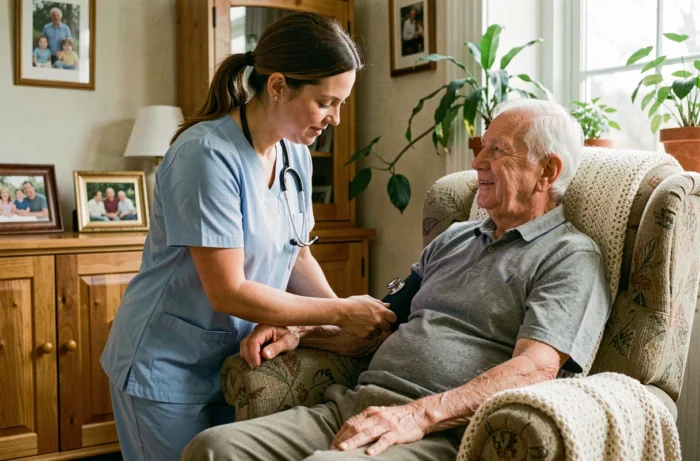
Home health services are not just a list of paramedical services provided at the patient’s home. Their effectiveness relies on mechanisms of coordination, evaluation, and funding, the understanding of which directly affects the quality of care. Here, we detail the technical points that general content often overlooks.
Quality evaluation of home autonomy services: the HAS reference framework as a selection criterion
Home autonomy services (SAD) are subject to a evaluation every five years by an accredited organization, according to the framework defined by the Haute Autorité de santé. This evaluation cycle serves as an objective filter that is rarely mentioned in guides intended for families.
We recommend checking the date of the last evaluation before any contractual agreement. A service whose evaluation dates back more than four years is approaching its renewal, which may indicate either a stable structure or a provider in the process of upgrading.
The organizations listed on apss-sante.fr incorporate this logic of continuous evaluation into their operations, with monitoring of quality indicators between two official cycles. This point distinguishes operators engaged in a process of improvement from those who settle for the minimum regulatory requirements.
Communication notebook and digital transmissions: ensuring continuity of home care
The continuity of communication between caregivers has become a central regulatory and operational issue. The communication notebook, whether paper or digital, must make visible clinical observations, risk prevention, and the patient’s care pathway.

The digitization of exchanges between caregivers is part of recent developments in the sector. It helps reduce information loss during handovers and tracks interventions in real-time.
The transition to digital is not straightforward. Field teams (nurses, nursing assistants, home helpers) must be trained on the tool and have reliable access. Without this condition, digitization remains a display without any effect on actual coordination.
Points to check in the transmission protocol
- Does the service use a shared digital tool among all caregivers (SSIAD, SAAD, independent nurses), or does each professional work with their own support?
- Do the transmissions include a risk prevention component (falls, malnutrition, isolation) and not just a report of actions performed?
- Do the attending physician and caregivers have access, even partial, to the information in the communication notebook?
Territorial disparities and funding for home care: a structural reality
The reform of home autonomy services is still in the deployment phase, with significant implementation gaps between departments. This transition temporarily creates differences in access and coordination between territories, a parameter that families often discover at the time of request.
The Una network points out a limitation that is rarely stated: the existence of a service does not guarantee its actual availability. In areas where human resources are insufficient, intervention times lengthen, and some services may be reduced. Current funding does not always cover the actual costs of interventions, which undermines the sustainability of the offer in the least equipped territories.
For individuals with loss of autonomy or disabilities, this structural data weighs on the choice between staying at home and entering an institution. We observe that the families who are best supported are those who anticipate the search for services several months before the actual need.
Coordination between SSIAD, SAAD, and independent nurses: articulating interventions
The distinction between SSIAD (home nursing services) and SAAD (home help and support services) is not merely administrative. SSIAD provides care acts on medical prescription. SAAD covers assistance with daily living (personal hygiene, meals, maintenance of the living environment).
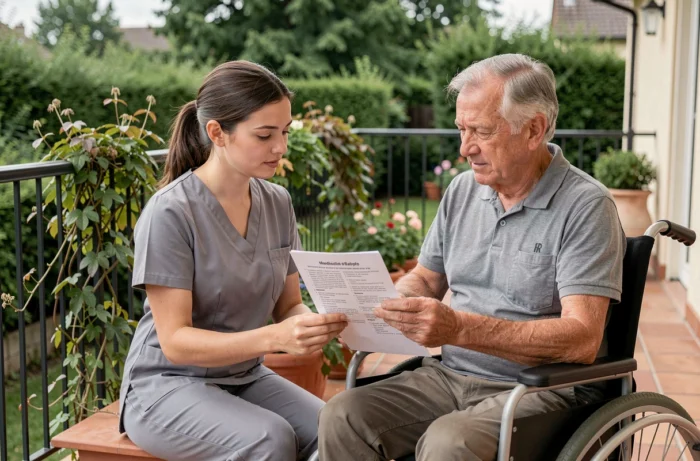
The use of independent nurses in addition to or instead of SSIAD depends on local availability and the level of care required. The coordination between these actors determines the quality of home care, especially for patients with multiple health issues.
Criteria for deciding between SSIAD and independent nurses
- The SSIAD operates on a global budget and does not generate out-of-pocket expenses for the patient. The independent nurse is reimbursed by health insurance but may involve additional charges depending on the services provided.
- The SSIAD includes a multidisciplinary team (nursing assistants, coordinating nurses) that ensures continuous monitoring. The independent nurse intervenes more sporadically.
- In areas with low SSIAD density, the independent nurse remains the only option available quickly, which requires increased vigilance regarding coordination with other caregivers.
The APA (personalized autonomy allowance) finances part of the home help hours, but its amount varies according to the GIR and the department. Caregivers should factor this parameter into their support plan, without waiting for the official notification to initiate steps with the services.
The home care sector is evolving under the combined effect of the SAD reform, the digitization of transmissions, and funding constraints. The quality of care depends less on the number of available services than on their ability to coordinate and transparently report their interventions.