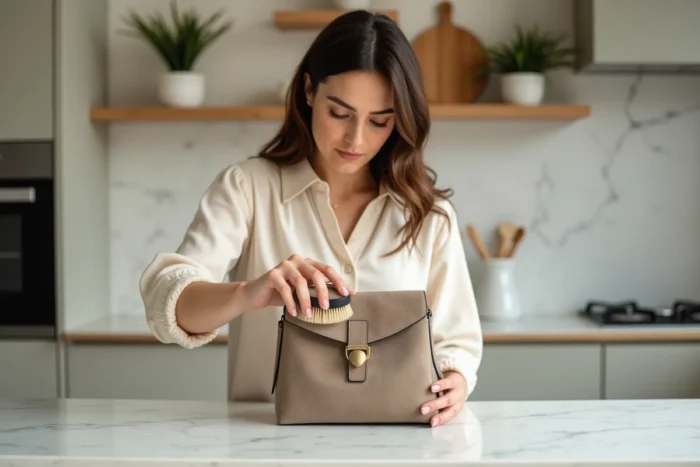
Natural suede, derived from the inner side of an animal hide (usually lamb or goat), reacts to solvents, water, and friction in a radically different way than microfiber or brushed polyester imitations. Cleaning a suede bag with the wrong method often amounts to a death sentence: irreversible stains, permanently flattened fibers, altered color. Here, we detail the technical gestures that preserve the material, starting with the point that most guides overlook.
Natural suede or faux suede: identify the material before any cleaning action
For the past two to three seasons, alteration workshops and specialized cobblers have noted a marked increase in bags made of faux suede (microfibers, brushed polyester) brought in as “real suede.” The problem is symmetrical: applying a dry stain remover on synthetic suede is pointless, and using a soapy sponge on natural suede causes permanent stains.
The water drop test distinguishes the two materials in a few seconds. On genuine suede, a micro-drop placed on a discreet corner (under a flap, near an inner seam) darkens the area and is absorbed slowly. On an imitation, the drop beads or remains on the surface without altering the color.
A second reliable indicator: the structure of the fibers. Natural suede has irregular fibers of varying lengths that change shade when you run your finger against the grain. Synthetic suede offers a uniform, almost too regular velvet without variation in color to the touch.
If the inner label mentions “polyester,” “polyurethane,” or “microfiber,” the bag can withstand light aqueous cleaning (wrung sponge, mild soap) and even, for some models, a cold machine wash. We recommend always checking this label before taking out the crepe brush.
For more in-depth protocols suited to each type of material, we advise consulting how to clean a suede bag on Style et Chic, which details the specific gestures for natural leathers.
Brushing and dry stain removal: the protocol that preserves suede fibers
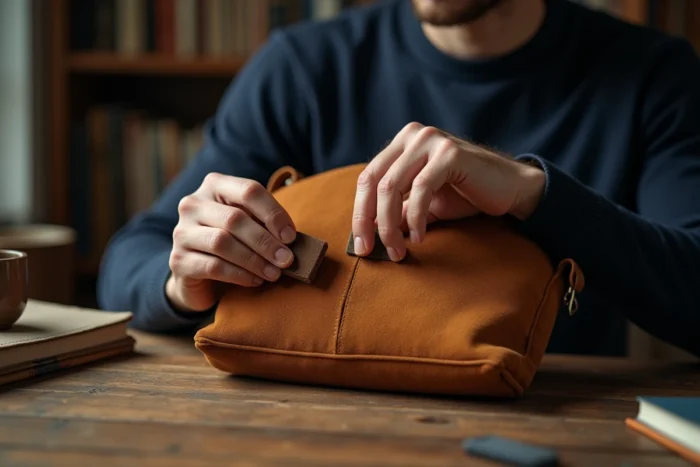
On a natural suede bag, dry cleaning remains the only truly safe approach. Any wet intervention, even localized, risks creating a stain more visible than the original one. We distinguish three levels of intervention depending on the nature of the dirt.
Dust and superficial stains
A crepe brush (natural rubber) is sufficient. The motion is always unidirectional, in the direction of the fibers, with light pressure. Brushing in circles or against the grain flattens the fibers and creates shiny areas that are impossible to correct without steam.
Localized dry stains
The suede eraser (or specific crepe eraser) is used with short, precise rubs on the affected area. Never rub a still-wet stain: the eraser would spread the pigment into the fibers instead of extracting it. Wait for complete drying, then erase, and finally brush to raise the nap.
Embedded greasy stains
- Sprinkle a thick layer of Sommières clay (natural absorbent clay) on the area, without rubbing. Leave it to act for at least a whole night for the clay to absorb the greasy substance.
- Remove the powder the next day with a soft brush, then use the crepe brush to straighten the fibers.
- If the stain persists after two applications, take the bag to a specialized workshop rather than multiplying attempts. Each pass of the eraser or powder wears down the surface of the suede.
Talc works similarly to Sommières clay, but its absorbent power is lower on heavy greases (cooking oil, lip balm). We reserve it for light or recent stains.
Vinegar, makeup remover, ammonia: why these recipes damage natural suede
Tips based on white vinegar or makeup remover are now discouraged by leather goods brands in their care instructions. Vinegar, even diluted, alters the pH of the leather and can cause localized whitening on dark shades. Makeup remover leaves a greasy film that then attracts dust and dulls the velvet in a few weeks.
Ammonia, sometimes recommended in older guides, is even more aggressive. It irreversibly discolors suede and weakens the fibers to the point of creating bald patches. On an imitation bag, these products cause less damage, which explains why some “tips” seem to work: they have been tested, unknowingly, on synthetic materials.
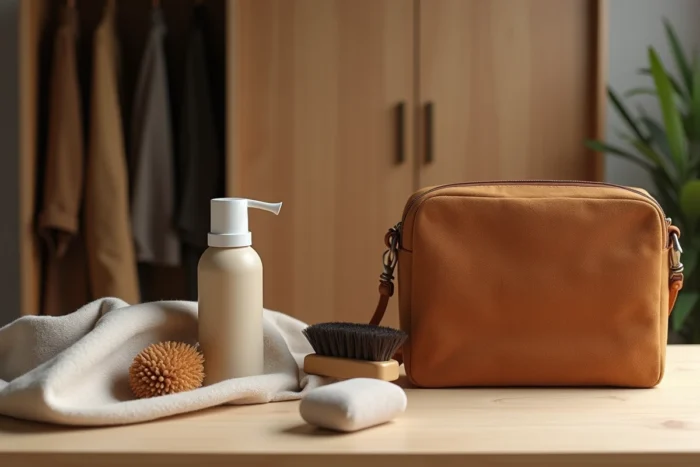
If a stain resists the dry protocol (eraser, Sommières clay, brushing), the least risky solution remains steam. A brief pass over a kettle (without direct contact with the water) softens the dirt and allows for more effective brushing. The minimum distance between the steam source and the bag should remain sufficient to avoid any direct condensation on the surface.
Recoloring rather than intensive cleaning on light suedes
Renovation workshops have seen an increase in requests for partial recoloring of very light suede bags (beige, ecru, pastel) rather than intensive cleaning. The reasoning is simple: bright shades easily turn yellow or gray due to repeated stain removers, and each cleaning wears down the velvety surface a little more.
Repositioning to a darker color, carried out by a professional with suede-compatible pigments, covers residual traces without damaging the fiber. This option often costs less than a series of specialized cleanings and offers a more durable result.
Mid-range and high-end leather goods brands are increasingly incorporating maintenance or renovation services in-store, with a standardized protocol (brushing, dry stain removal, local recoloring). This type of service significantly limits the risk of stains compared to home methods.
Protection and storage of the suede bag between uses
A waterproofing spray applied every two to three months forms a barrier against moisture without clogging the fibers, provided you choose a product formulated for nubuck and suede (smooth leather waterproofers leave an unsuitable shiny film).
- Store the bag in a breathable cotton bag, never in plastic which retains moisture and promotes mold.
- Stuff the interior with unprinted tissue paper to maintain shape and absorb residual moisture.
- Avoid prolonged exposure to direct sunlight, which can discolor natural suede in just a few hours.
A well-protected suede rarely requires deep cleaning. The majority of damaged bags received by cobblers had never been waterproofed. The preventive gesture remains, by far, the most cost-effective way to preserve the velvety appearance of a suede bag over several years.