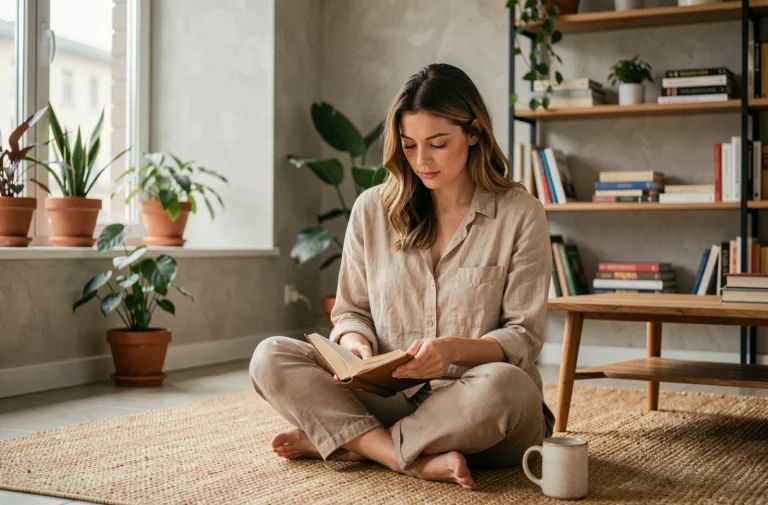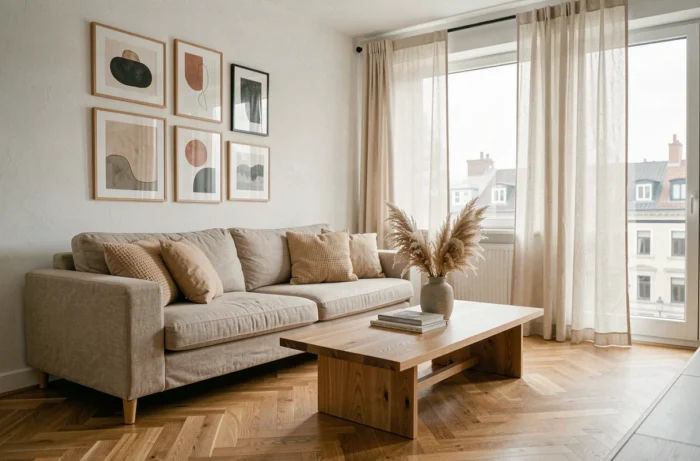
Interior decoration refers to the choices of materials, colors, furniture, and layout that define the atmosphere of a living space. In 2026, these choices are leaning towards warmer, textured, and sustainable interiors, with a clear retreat from cold minimalism in favor of deep palettes and tactile materials.
Textured wall finishes: the alternative to smooth, neutral walls
The matte white wall, long considered a standard, is giving way to expressive surfaces. Recent decor research indicates a marked return of finishes such as venetian plaster, stone effect, or linen wallpaper. These treatments add visual depth without additional furniture.
Venetian plaster, for example, creates subtle variations in hue depending on the angle of light. On a living room wall or in an entryway, it replaces a decorative painting while serving as a neutral backdrop for the furniture. Linen-textured wallpaper, on the other hand, adds a tactile dimension that softens spaces with strong geometric lines.
For those who wish to discover decor on Wiki for Home, these wall finishes are a good starting point: they transform a room without altering the existing furniture.
The choice of a textured finish imposes a technical constraint often overlooked: the preparation of the substrate. A cracked or uneven wall will render the venetian plaster unsightly. Before applying this type of coating, leveling or smoothing plaster is sometimes necessary, which adds a step to the project.
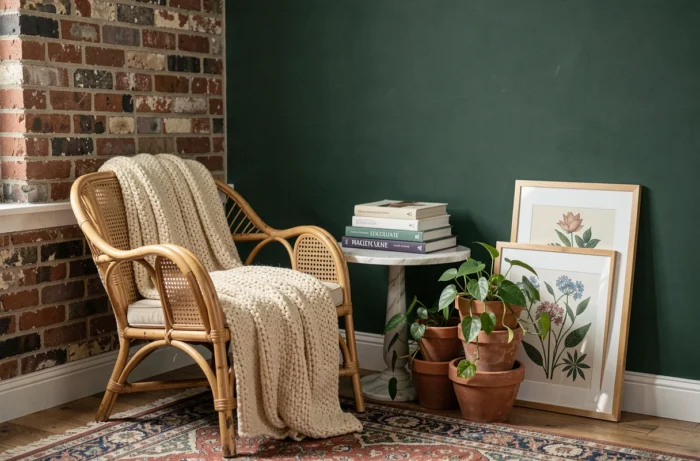
Curved furniture and color drenching: two complementary decor trends
Furniture with rounded silhouettes is gaining ground over straight and angular lines. Sofas with curved armrests, oval coffee tables, enveloping armchairs: these organic shapes visually soften rectangular spaces, which make up the majority of living areas in collective housing.
This trend combines with color drenching, a technique that involves applying the same shade to the walls, woodwork, ceiling, and sometimes furniture. The result is an immersive space where color envelops rather than punctuates.
How to combine curves and color without overwhelming the room
The trap of color drenching is monotony. To avoid it, the contrast of textures replaces the contrast of colors. A curved terracotta corduroy sofa placed in a room entirely painted in a neighboring tone works if the floor brings a different material (light wood, polished concrete, looped wool rug).
Limiting color drenching to a single room, or even to one wall and its ceiling, avoids the tunnel effect. A room saturated with color benefits from retaining elements in raw materials (wood, stone, patinated metal) that visually anchor the space.
Sustainable and upcycled materials: a structuring decor criterion
Sustainability is no longer just a marketing argument. It directly influences material choices in decoration, with a rise in recycled and upcycled solutions. The global interior decoration market identifies sustainability as a central driver of recent purchases.
- Recycled textiles (cushions, throws, curtains made from recovered fibers) offer textures comparable to virgin fibers, with a reduced environmental impact
- Upcycled furniture (restored vintage pieces, reclaimed wood transformed into shelves or tabletops) provides a uniqueness that mass-produced furniture cannot replicate
- Low-VOC (volatile organic compounds) paints are becoming widespread, allowing for interior renovations without compromising air quality
Upcycling imposes a compromise: time. Finding an antique dresser, sanding it down, repainting it, and replacing its handles takes several days of work. This is not a suitable choice for an urgent decoration project, but the result produces unique pieces that are impossible to replicate.
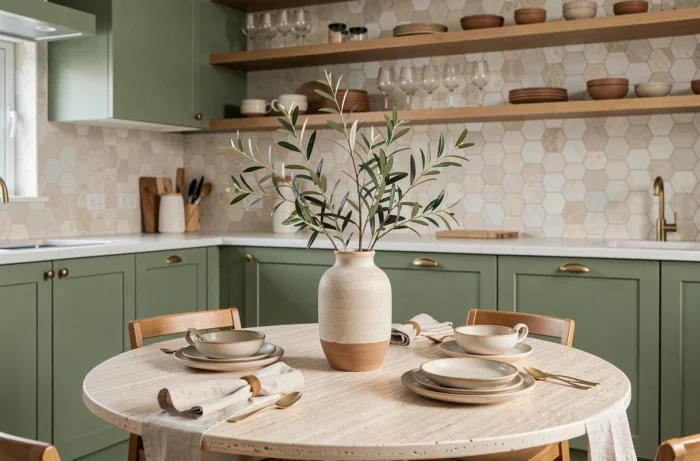
Deep color palette: beyond beige and gray
Neutral shades are not disappearing, but they are now sharing space with bolder colors. Deep palettes (burgundy, dark sage green, midnight blue, chocolate brown) are settling into living rooms and bedrooms.
Choosing a dominant color based on natural light
A north-facing room, which receives little direct light, struggles with a midnight blue on all four walls. In contrast, a dark sage green, which retains some warmth, works better there. South or west-facing rooms, bathed in light for part of the day, absorb dark shades without appearing cramped.
- Bright room (south/west): burgundy, midnight blue, forest green, usable on large surfaces
- Dim room (north/east): warm brown, sage green, terracotta, to be favored on one or two walls
- Transitional spaces (hallway, entry): a single strong color on the back wall creates a depth effect without darkening the whole
The often-cited 60-30-10 rule (dominant color, secondary, accent) remains a useful guideline, but color drenching challenges it by removing the hierarchy of shades. Both approaches coexist, and the choice depends on the desired effect: visual structuring or immersion.
Transforming an interior does not necessarily require a substantial budget or a complete change of furniture. A textured wall finish in the entryway, a curved armchair replacing an angular chair, a recycled textile cushion on an existing sofa: each targeted modification shifts the visual balance of a room. The most effective approach is to start with the most visible surface, the main wall of the living room or living area, and let the rest adjust gradually.