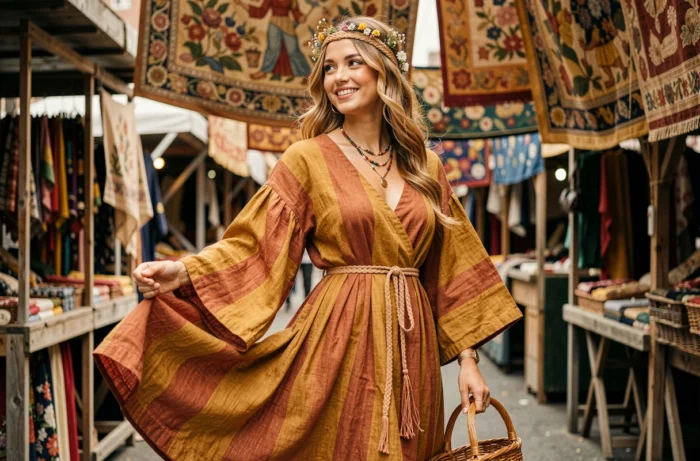
The hippie style of the 70s refers to a wardrobe built around natural materials (suede, linen, crochet), fluid cuts, and floral or psychedelic patterns, inherited from the American counterculture movement. In 2026, this clothing vocabulary is no longer limited to thrift stores or festivals: it structures the collections of major fashion houses and hybridizes with other aesthetics, from grunge to western.
Suede boots and bohemian blouses: what the fall-winter 2026 shows borrow from the 70s
The hippie chic version of 2026 does not descend from a dusty attic. It comes from the runways. Chanel, Balenciaga, Dior, and Chloé have incorporated brown suede boots into their fall-winter 2026 collections, according to Vogue Arabia. Chloé, in particular, has been carrying this revival for about two years, which anchors the trend in a brand approach rather than a mere seasonal nod.
This presence on the runways changes the nature of the inspiration. The pieces are no longer folkloric quotes: they undergo contemporary pattern-making, with technical materials mixed with suede, and structured volumes disguised as fluidity. The bohemian blouse, another pillar of the seventies wardrobe, receives similar treatment, as detailed in a dedicated article from Vogue Arabia on how to wear it today.
This transfer from the runway to ready-to-wear explains why the hippie style appeals to a much broader audience than just vintage fashion enthusiasts. A topic to read on Magmoiselle analyzes the reasons behind this resurgence.
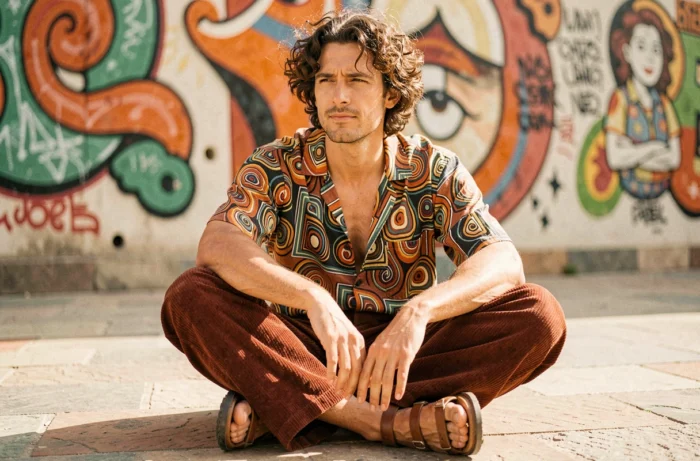
Boho-grunge hybridization: why the hippie style is no longer worn ‘pure’
Reproducing a head-to-toe Woodstock silhouette in 2026 would be akin to wearing a costume. What works is the mix. The most telling example comes from Olivia Rodrigo, spotted in a boho-grunge look combining a pleated skirt, soft knitwear, and biker boots, according to Fashion Times relaying Vogue.
This hybridization is not a stylistic accident. It responds to two simultaneous expectations: the comfort of fluid cuts inherited from the hippie movement and the rebellious, more urban dimension of 90s grunge. The result is a look that does not copy any era but evokes two.
Three combinations that work in practice
- A floral printed blouse worn with raw straight jeans and chunky-sole ankle boots, to ground the bohemian in a daily register without tipping into costume
- A crochet vest over a plain black t-shirt, paired with a midi skirt and suede boots, creating a contrast of textures between the artisanal knit and leather
- A long fluid dress cinched at the waist with a short leather jacket, a direct mix of hippie freedom and rock energy
The common thread of these combinations: one seventies piece is enough to set the tone. The rest of the look remains contemporary, even intentionally understated.
Second-hand and hippie fashion: a supply chain that has become structural
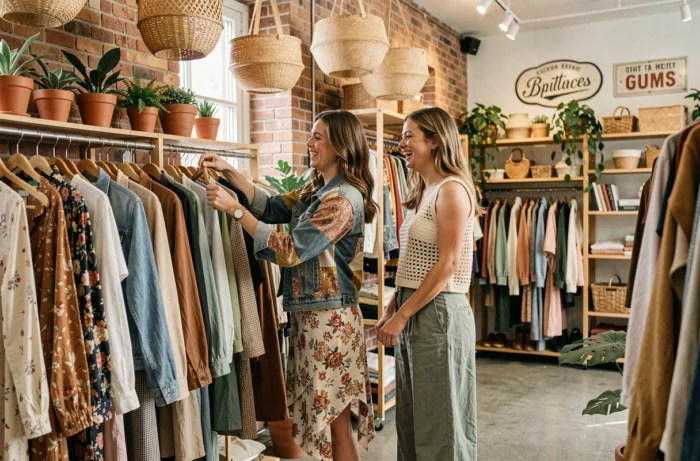
The hippie style of the 70s has an organic link with second-hand fashion. Suede pieces, pointed collar shirts, flare denim, or floral prints can easily be found in the second-hand market, often in better quality than entry-level new equivalents.
This circuit has taken on significant economic dimensions. According to a market analysis published in October 2026 based on GlobalData and ThredUp data, second-hand clothing accounts for about one-tenth of global clothing expenditures. Hippie chic directly benefits from this dynamic: sought-after pieces (embroidered blouses, suede jackets, fringe bags) circulate in volume on specialized platforms.
A context that favors vintage
The regulatory constraints on the textile industry tend to increase the cost of cheap new items, making second-hand comparatively more attractive.
For consumers drawn to the bohemian look, this creates a rare alignment: the aesthetic choice coincides with an economic and regulatory choice. Wearing vintage seventies in 2026 is both following a runway trend and anticipating a fundamental movement in textile consumption.
Why the hippie style appeals beyond fashion in 2026
The hippie movement carried a message about individual freedom, the relationship with nature, and the rejection of standardized consumption. These values resonate directly with current concerns about sustainability, minimalist dressing, and the quest for authenticity.
Hippie clothing, through its material (natural fibers, plant dyes) and its history (craftsmanship, local production), embodies a counter-model to industrial textile production. It is no coincidence that Chloé, a brand that has made responsible development a strategic axis, is also the one most visibly carrying the bohemian revival on the runways.
The allure of the hippie style in 2026 thus lies in this layering of factors: an aesthetic validated by the runways, easier access through second-hand, a regulatory framework that favors vintage, and a foundation of values in tune with the times. Hippie chic is not a step back but a convergence of contemporary factors that give a wardrobe over fifty years old renewed relevance.