
Heating represents the largest share of energy expenses in a home. Adjusting the thermostat and the set temperature are real levers, but a more structural question arises beforehand: at what point does investing in efficient ventilation, targeted insulation, or room-by-room regulation become more cost-effective than simply lowering the thermostat by one degree?
Double-flow ventilation and heat recovery: an economical heating lever
Opening windows for ten minutes a day to renew the air is a common reflex. The downside: this ventilation expels accumulated heat, and the heating system must compensate immediately after closing.
The double-flow ventilation changes this relationship. Incoming air is preheated by the heat of the outgoing air, with a recovery rate of up to 90% on the most efficient models. Common systems recover about 70% of this thermal energy. Air renewal occurs continuously, without opening windows, and without losing the heat already paid for.
Setting the temperature to 19 °C in living areas produces a measurable effect. If warm air escapes through poorly designed ventilation or through regular openings, this gain disappears. Finding the advice from Mon Chauffage Économique allows for a deeper understanding of these trade-offs between equipment.
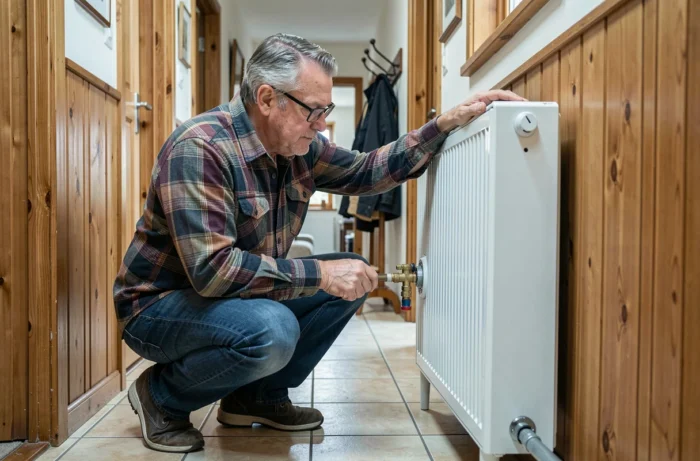
Room-by-room regulation: regulatory framework and real obligations
The obligation for automatic heating regulation in existing buildings has been postponed to January 1, 2030. New buildings remain subject to the 2027 deadline. This distinction directly impacts households’ investment timelines.
There is often confusion about the type of equipment required. A connected thermostat is not mandatory: the regulation aims for programmable automatic regulation by room or zone. A classic programmable thermostat may suffice as long as it meets the required control criteria.
The benefit of zoned regulation goes beyond compliance. Heating an unoccupied bedroom to 19 °C during the day, or maintaining a comfortable temperature in an office over the weekend, constitutes a waste that zoned programming eliminates without daily effort.
Disappearance of the connected heating boost and return on investment
The national program “Coup de pouce Pilotage connecté du chauffage pièce par pièce” was removed at the end of 2024. This aid significantly reduced the installation cost of connected thermostats. Without it, the return on investment for a connected thermostat is extended.
In a home that is already properly insulated, a classic wired pilot programmer can offer a more favorable cost-effectiveness ratio than a high-end connected system. The actual gain depends on the area, the number of zones, and occupancy habits.
Targeted insulation: when it makes thermostat adjustment secondary
Lowering the set point by one degree reduces heating consumption. In a poorly insulated home, this saving is partly offset by continuous losses through walls, windows, and thermal bridges.
Three targeted interventions produce a disproportionate effect relative to their cost:
- Sealing windows and doors with weatherstripping or draft stoppers, which stops cold air infiltration at almost no cost
- Installing thick thermal curtains in front of windows and patio doors, adding an extra insulating layer at night
- Reducing the volume to be heated by closing doors to unoccupied rooms and turning off radiators in those areas
These actions require neither a craftsman nor a significant budget. However, they do require accurately identifying thermal leakage points, which is not always intuitive without a methodical survey.

Reclassification of energy performance diagnoses for thermal sieves
Insulation takes on a new dimension with recent changes to energy performance diagnosis. Up to 500,000 homes classified as thermal sieves could change status due to a modification in the calculation method of the DPE, without physical work. This administrative reclassification does not change the thermal reality of the building, but it alters the obligations and associated financial incentives.
Balancing between thermostat, ventilation, and insulation according to one’s home
The hierarchy of investments varies based on the profile of the home. A recent apartment built to RT 2012 standards will benefit more from fine zoned regulation than from reinforcing already effective insulation. Conversely, an old house with single glazing will gain more by addressing losses before investing in a connected thermostat.
The criteria that guide this balancing act:
- The year of construction and the level of existing insulation (walls, attics, windows)
- The type of heating in place (electric, gas, heat pump) and its compatibility with zoned regulation
- The actual occupancy rate of rooms over a typical week
- The presence or absence of controlled mechanical ventilation
The profitability of a programmable thermostat primarily depends on the thermal envelope of the building. Without proper insulation, programmed temperature reductions yield only a fraction of the expected savings, as losses continue at the same rate.
The available data does not allow for setting a universal profitability threshold among these three levers. The local context (climate, energy prices, remaining regional aids) weighs as heavily as the technical characteristics of the home. An energy audit remains the most reliable means to prioritize loss points and direct the first investment towards the one that will yield the most measurable gain.