
A production line that stops unexpectedly costs much more than the repair itself. Loss of rhythm, delivery delays, emergency mobilization of teams: the cascade of consequences affects the entire chain. Optimizing factory maintenance in 2026 requires a balancing act between field data, regulatory constraints, and human organization.
Regulatory compliance for machines 2027: what changes now for maintenance
The Machinery Regulation (EU) 2023/1230 will replace Directive 2006/42/EC starting January 20, 2027, with a transition period that began in July 2023. This change will heavily impact daily maintenance practices.
This new regulation is not only about the design of equipment. It imposes complete traceability of the machine’s life cycle, including software updates and digital safety functions. For a maintenance manager, this means that a simple firmware update on a controller can reclassify the machine as a “new machine,” requiring a compliance reassessment.
Starting in 2026, every industrial site should systematically document any changes to safety parameters. A formal risk analysis for each “substantial modification” becomes a necessity, not a luxury. Ignoring this obligation exposes one to production stoppages imposed by non-compliance, rather than a mechanical failure. This is a blind spot that many factories will discover too late.
Anticipating this deadline also means reviewing Airbuzz solutions for maintenance that integrate this regulatory dimension into intervention management.

Predictive maintenance in factories: going beyond the buzzword
The term “predictive maintenance” is everywhere. IoT sensors, artificial intelligence, real-time dashboards: the promise is appealing. On the ground, results depend on very concrete conditions.
Predictive maintenance can significantly reduce unplanned downtime. But it only works if three conditions are met:
- Properly positioned, calibrated, and maintained sensors (vibration, temperature, pressure, electrical current) that continuously provide reliable data.
- An analysis platform capable of distinguishing a real alert signal from statistical noise, which requires a sufficient historical data set for each piece of equipment.
- Technicians trained to interpret alerts and decide whether the intervention is urgent, scheduled, or simply needs monitoring.
Without proper historical data, the predictive algorithm predicts nothing. Many factories install IoT sensors without cleaning their existing databases. The result: false positives that overwhelm teams and real signals drowned in noise.
Start small to ensure process reliability
Why try to instrument an entire production line at once? Industrial feedback shows that it is better to choose one or two critical pieces of equipment, those whose failure halts the entire chain. Install the sensors there, collect data for several months, and adjust alert thresholds.
This gradual approach avoids two pitfalls: the extra cost of a premature mass deployment and the loss of trust from technicians facing a system that generates too many false alerts. A successful pilot on a critical machine is better than a shaky global deployment.
Resource and skills management: the often-overlooked link
Maintenance technologies are worthless without the people who use them. In 2026, the shortage of qualified technicians remains a major barrier in the industry. Tools change quickly, but skill development takes time.
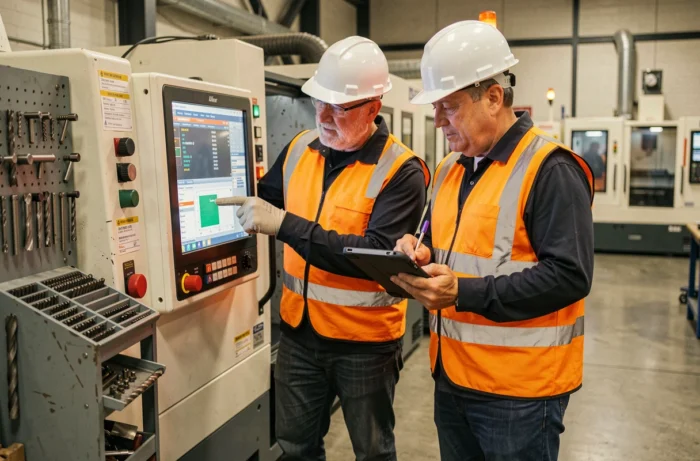
A technician accustomed to corrective maintenance (intervening after a failure) does not become a vibration data analyst by taking a two-hour e-learning module. The transition to conditional maintenance requires on-site support, with experienced/novice pairs and practical cases on the actual equipment on site.
Balancing the load between preventive and corrective maintenance
Have you noticed that in many factories, the preventive maintenance schedule gets skipped as soon as an urgent failure occurs? Technicians are mobilized for corrective actions, preventive tasks are postponed, and a vicious cycle sets in: less preventive maintenance leads to more failures, which require even more urgent resources.
Breaking this cycle requires a clear organizational decision: to safeguard dedicated time for preventive maintenance, even when a corrective intervention is underway. This involves team sizing that considers both simultaneous flows, not just one.
Reducing maintenance costs: balancing performance and budget
Reducing costs does not mean reducing interventions. The goal is to replace unplanned stoppages with scheduled interventions, which have predictable costs and controlled durations.
A scheduled four-hour shutdown on a Saturday morning, prepared with the necessary parts in stock and the right technician, costs a fraction of what an unplanned shutdown during production on a Tuesday at 10 AM would cost. The difference does not come from the technology used, but from the ability to plan.
- Identify the five pieces of equipment whose failure has the greatest impact on revenue, and focus predictive maintenance efforts on them.
- Maintain a buffer stock of critical parts for these pieces of equipment, even if it incurs storage costs, because the cost of prolonged downtime waiting for parts is much higher.
- Track a simple indicator: the ratio of planned maintenance hours to corrective maintenance hours. When planned maintenance exceeds corrective, the dynamic is set in motion.
No factory will achieve zero failures. Gradually transforming unplanned stoppages into scheduled ones remains the most cost-effective lever, regardless of the size of the site.