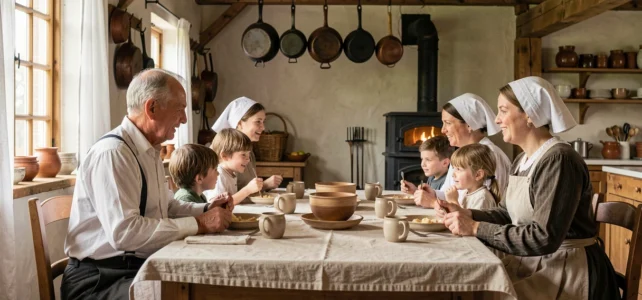
The Amish practice a strict institutional monogamy. Their marital doctrine, inherited from the Anabaptist movement founded by Jakob Amman in 1693, allows no room for polygamy. When discussing polygamy among the Amish, this community is almost systematically confused with other North American religious groups, notably certain dissident Mormon branches.
Amish Ordnung and Marital Discipline: A Closed Doctrinal Framework
The Ordnung, the unwritten code of conduct that governs each Amish district, rigidly frames marriage. A baptized member can only marry one person, who must also be a baptized member of the community. Any serious infraction, including adultery, exposes one to Meidung, excommunication with complete social ostracism.
This disciplinary mechanism makes polygamy structurally incompatible with Amish life. Marriage is viewed as a commitment before God and the congregation, indissoluble and exclusive. Divorce does not exist in Amish practice, and remarriage only occurs in the case of widowhood.
We observe that the confusion often arises from the terminological proximity between Anabaptists, Mennonites, and Mormons in popular imagination. Fundamentalist Mormons (FLDS), who do practice polygamy, have no historical, theological, or organizational ties to the Amish. The amalgamation of these two groups fuels a widespread misconception online, where polygamy among the Amish is the subject of many unfounded doctrinal inquiries.
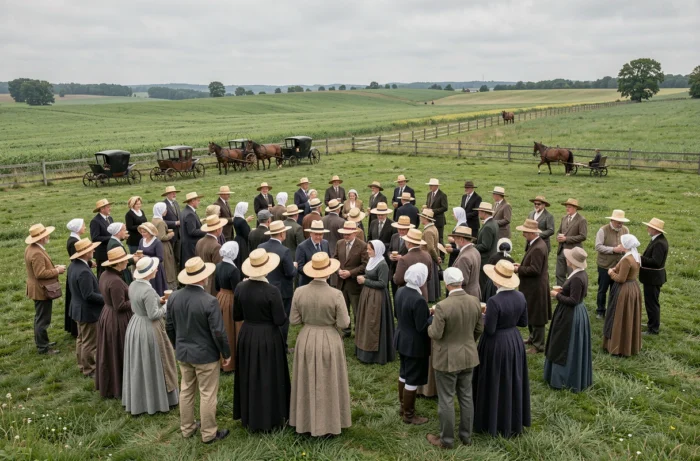
Amish Endogamy and Consanguinity: The Real Marital Issue
The topic that mainstream articles often sidestep is endogamy. The Amish almost exclusively marry among themselves, within communities that sometimes consist of only a few hundred members. This genetic isolation poses a documented health issue, far more concrete than the imagined polygamy.
Several rare genetic disorders appear with abnormally high frequency in certain Amish communities due to a founder effect. The districts of Pennsylvania and Ohio, which concentrate the majority of the Amish population in the United States, are particularly affected.
The paradox is clear: the strict monogamous norm, combined with the prohibition against marrying outside the community, produces a genetic impoverishment that polygamy, by definition, would not exacerbate. The issue is not the number of wives but the restricted marital pool.
Why Amish Marriage Remains Within the Community
An Amish person who marries an outside, non-baptized individual in the Anabaptist faith exposes themselves to exclusion. The spouse must accept Amish baptism, renounce modern technology, and submit to the Ordnung of the district. This barrier discourages most mixed unions.
The rumspringa, this period of relative freedom granted to youth before baptism, does not fundamentally change the situation. Contrary to what some documentaries suggest, rumspringa primarily serves to find a spouse within the community, not to explore the outside world.
Amish, Mennonites, and Mormons: The Differences That Create Confusion
The confusion between these three groups is based on superficial similarities: North American origin, a lifestyle perceived as traditional, and the importance of large families. However, the doctrinal differences are radical regarding marital issues.
- The Amish are Anabaptists from the European Protestant Reformation of the 16th century, separated from the Mennonites by the schism of Jakob Amman. Exclusive monogamy, no exceptions.
- The Mennonites share Anabaptist roots but with varying degrees of modernization depending on the branches. No polygamous practices either.
- The Mormons (Church of Jesus Christ of Latter-day Saints) officially abandoned polygamy in 1890, but some dissident fundamentalist branches maintain it. These groups are the ones that fuel television reports and reality shows.
When an internet user types “Amish polygamy,” they are actually seeking information related to fundamentalist Mormons or other closed religious communities. No academic source documents structural polygamy among the Amish.
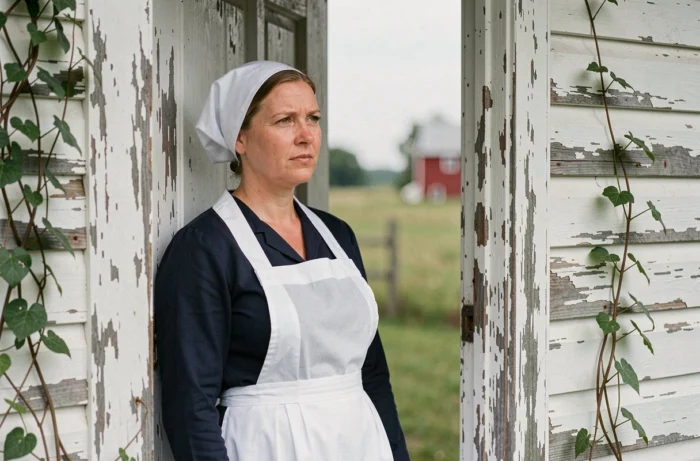
Individual Deviances and Abuse in Amish Communities
The absence of institutional polygamy does not mean the absence of deviances. Several legal cases have highlighted instances of marital and sexual abuse within Amish communities. These cases fall under individual criminal law, not an organized community practice.
The decentralized Amish ecclesiastical structure by district, without centralized hierarchy beyond the local bishop, complicates the detection and reporting of these abuses. Geographic isolation and lack of communication technology reinforce the opacity.
Some victims who have left the community, like Saloma Miller Furlong in her published testimony, describe a system where community pressure discourages complaints. The issue is one of social control in a closed group, not of polygamy.
What Recent Legal Cases Reveal
The reported cases involve domestic violence, early marriages, or abuse of minors, never polygamous unions. American justice is increasingly intervening in these communities, but resistance to civil authority remains strong in the most conservative districts.
- Local bishops traditionally manage internal conflicts through community mediation, without resorting to civil courts
- Meidung (excommunication) serves as the main disciplinary tool, but it protects the group’s reputation more than individual victims
- Young people who leave the community during rumspringa and do not return lose all family ties, which discourages departures even in cases of abuse
The myth of Amish polygamy diverts attention from the real dysfunctions of these closed communities. The real issues are endogamy, judicial opacity, and the difficulty of accessing social services for members who voluntarily live on the fringes of modern society. These are the subjects that deserve thorough examination, not a baseless rumor.