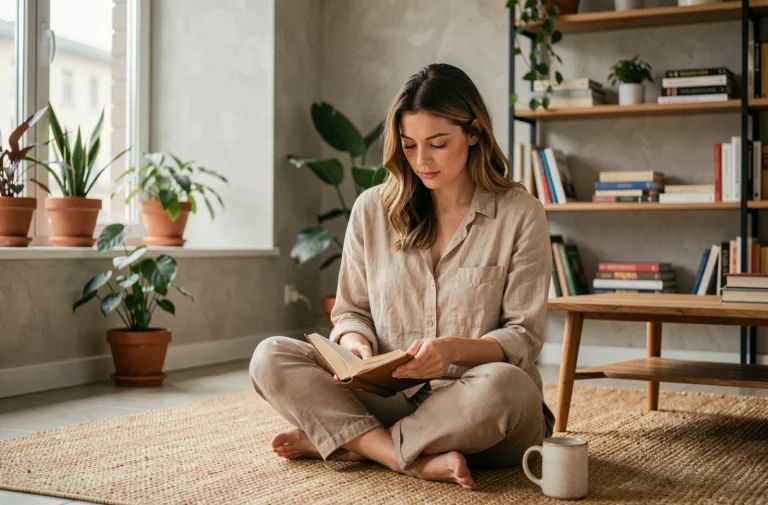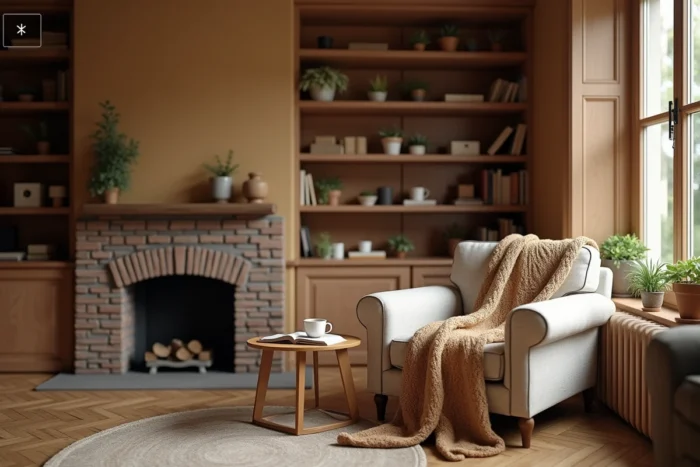
The warmth of an interior is not declared with a throw blanket tossed over a sofa. It results from technical choices regarding materials, light, and proportions, choices that most decor guides gloss over in favor of shopping lists. We will detail the levers that truly transform a house into a cozy cocoon, starting with those that popular articles ignore.
60-30-10 Rule and the Limit of Two Dominant Materials for a Cozy Cocoon
Any color palette intended to warm up a living room or bedroom benefits from adhering to the 60-30-10 rule: the dominant color covers about the walls and floor, the secondary dresses the main furniture, and the third adds accents (cushions, vase, frame). Without this hierarchy, warm tones cancel each other out and produce a saturated effect rather than an enveloping one.
Regarding materials, we recommend never exceeding two dominant materials per room. Wood and linen, stone and boucle wool, polished concrete and velvet: each duo is enough to set a mood. Adding a third material in equal proportion muddles the reading of the space and dilutes the feeling of comfort.
The rule of three, complementary, applies to decorative objects: grouping elements in threes (three candles of different heights, three aligned frames) creates a visual rhythm perceived as soothing. This composition principle, borrowed from professional styling, structures an interior without overloading it. To delve deeper into these layout concepts, you can access tamaisontonjardin.net and explore the different approaches room by room.
Layered Lighting: Light Scenography from Living Room to Bedroom
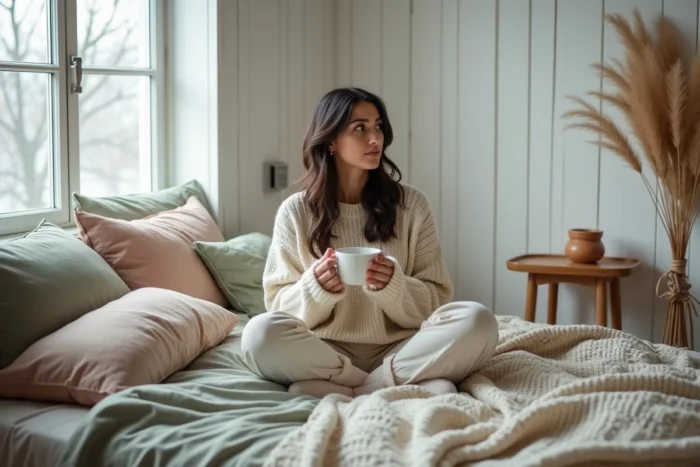
Layered light replaces a single lamp as the main tool for perceived warmth. The principle involves layering three levels: a diffuse general lighting (dimmer ceiling light or adjustable spots), functional lighting (reading lamp, desk lamp), and ambient lighting (string lights, candles, sculptural floor lamp).
Each layer can be controlled independently. In the evening, turning off the general light and keeping only the ambient light transforms a standard living room into a cocoon without touching the furniture or the wall color. The cost remains modest: a warm white LED string light and a tinted glass table lamp are enough to create a second layer.
Color Temperature and Bulb Choices
We observe a recurring mistake: mixing bulbs of different temperatures in the same room. A 4,000 K (neutral white) spot next to a 2,700 K (warm white) lamp creates an unpleasant contrast. For a cocoon ambiance, all sources in the same room should remain below 3,000 K.
Sculptural light fixtures, trendy for several seasons, also serve as decorative pieces when turned off. A woven rattan or pleated paper lampshade filters light and casts soft shadows on the walls, adding a tactile dimension to the lighting.
Sensorial and Sustainable Materials: Going Beyond All-Textile
Classic decor articles associate a cozy cocoon with an accumulation of textiles. The result works in the short term but ages poorly and poses maintenance issues. The documented trend for recent seasons goes further: natural, durable, and sensorial textures such as raw dark wood, textured stone, tinted glass, and textiles made from recycled fibers.
Recycled wood, for example, brings a patina that new wood lacks. Used as a wall shelf or coffee table top, it anchors the room in a tangible materiality. Stone (travertine, sandstone) used as a serving platter, catch-all, or lamp base introduces a visual weight that stabilizes the decor.
Combining Comfort and Durability in Every Room
- In the living room, favor a thick-grain recycled fabric sofa over a fine synthetic velvet that pills within months. The touch remains soft, and the durability is superior.
- In the bedroom, opt for washed linen bedding: this textile improves with washing and naturally regulates body temperature, summer and winter.
- In the entryway, a solid wood bench with a removable felt wool cushion creates a functional decompression area without resorting to disposable furniture.
Warm Colors for the Living Room: Beyond Beige
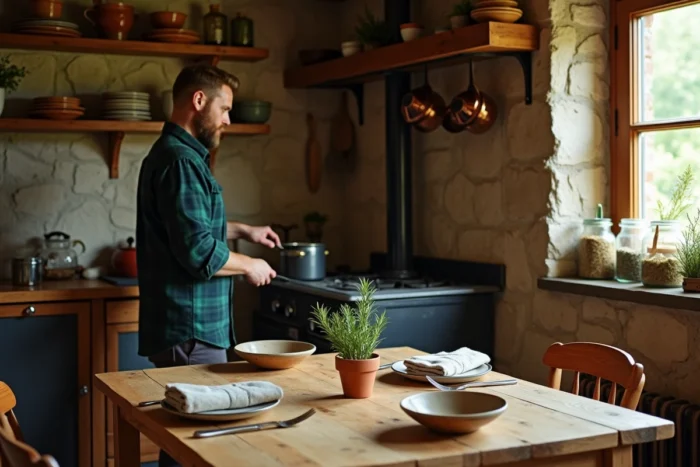
Beige remains a safe choice, but it is not the only option for warming up a space. Terracotta, rust, and golden ochre shades, applied to a single accent wall, are enough to radically change the thermal perception of a room. The rest of the walls should maintain a light neutral tone to avoid a cave effect.
A dark accent wall absorbs light and visually brings the surface closer, reducing the feeling of emptiness in large volumes. Conversely, in a compact bedroom, it’s better to apply the warm color on the wall behind the bed, which remains partially obscured by the headboard and does not shrink the perceived space.
Deep greens (sage green, forest green) also work as cocoon colors when paired with light wood and warm lighting. They bring an organic dimension that browns alone do not provide.
Rounded Furniture and Flow: Comfort is Also Designed in Plan
A chair with curved lines is not just an aesthetic trend. Rounded shapes reduce the visual rigidity of a room and physically invite one to settle in. A sofa with curved armrests, an oval coffee table, or a round mirror break the right angles that are omnipresent in standard architecture.
Flow matters as much as style. A living room where one must navigate around three pieces of furniture to reach the window will never be perceived as a cocoon, even if covered with throws. Leaving at least a clear passage between each area (seating, reading, dining) ensures a fluidity that directly contributes to the comfort felt.
The last lever, often overlooked, concerns height. Varying seating levels (low pouf, standard chair, bar stool) in the same space creates micro-zones that give the impression of inhabiting multiple atmospheres within a single room. This principle works particularly well in open living spaces where the living room and dining room coexist without partitions.